HomeAll Houseplants › Chinese Evergreen

Chinese Evergreen Care Guide

Aglaonema

The tolerant one.

Easy care Toxic to pets 432/440 Hz

Last updated: May 2026 · by PlantParentPlaylist

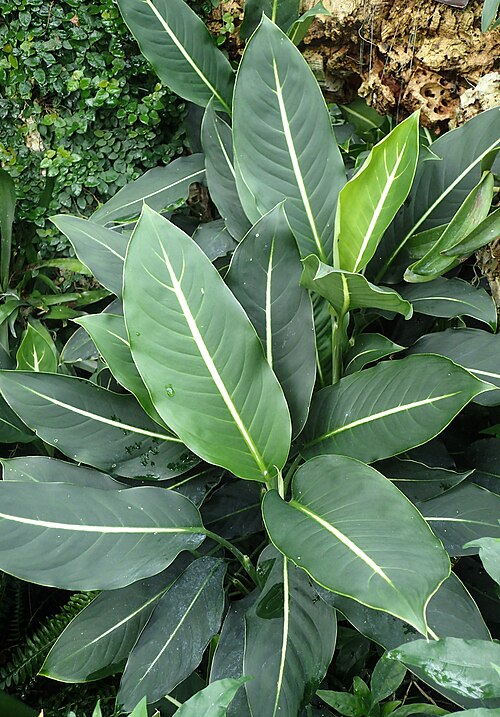
Photo: Kurt Stüber [1], CC BY-SA 3.0 — via Wikimedia Commons

Chinese Evergreen (Aglaonema)

📋 Quick Summary — Chinese Evergreen

  • Water when the top 3cm is dry.
  • Needs low to medium indirect light (200–2,500 lux) — match it to the right window.
  • Toxic to cats and dogs if chewed — keep out of reach.
  • Included in NASA's 1989 Clean Air Study, which confirmed it removes volatile organic compounds such as formaldehyde and benzene from indoor air.
  • Science-matched to 432/440 Hz music — the The Tolerant One playlist plays at 44–80 BPM.
Light
Low to medium indirect
Water
When the top 3cm is dry
Difficulty
Easy
Pets
Toxic
Playlist Hz
432/440 Hz →

What is a Chinese Evergreen?

The Chinese Evergreen (Aglaonema) is native to the tropical and subtropical forests of Asia.

The Chinese Evergreen is one of the most forgiving foliage plants you can own, tolerating low light, irregular watering and average rooms with ease. Modern varieties come splashed in silver, red and pink, and the green forms were confirmed air-purifiers in NASA's Clean Air Study.

Chinese Evergreens are among the most shade-tolerant foliage plants, though red and pink varieties need more light to keep their color. Sound, too, appears to matter: a 2024 review by Pagano & Del Prete at the Italian National Research Council found that frequencies in the 400–800 Hz range measurably promote stomatal opening and nutrient absorption in plants — the science the The Tolerant One playlist is built on.

How do you care for a Chinese Evergreen?

In short: give it low to medium indirect light, when the top 3cm is dry, and the conditions below. Here is each part of Chinese Evergreen care in detail.

Light

Low to medium indirect. Aim for roughly 200–2,500 lux.

Water

When the top 3cm is dry.

Humidity

Prefers 50%+ but tolerates average air.

Soil & Potting

Well-draining peat-based mix.

Fertilizing

Balanced feed every 6–8 weeks in growing season.

Repotting

Every 2 years.

Why is my Chinese Evergreen struggling? Common problems and fixes

Most Chinese Evergreen problems trace back to watering, light or humidity. Use this table to diagnose and fix the most common issues.

ProblemLikely causeFix
Yellow leavesOverwatering or coldLet soil dry; keep above 15°C
Brown tipsDry air or tap water saltsRaise humidity; use filtered water
Faded color in red varietiesToo little lightGive brighter indirect light
Curling leavesCold or underwateringWarm the spot and water
DroopingThirsty or root-boundWater; repot if roots are crowded

The science-matched playlist: The Tolerant One

The Chinese Evergreen is matched to 432/440 Hz music at 44–80 BPM.

Chinese Evergreens are among the most shade-tolerant foliage plants, though red and pink varieties need more light to keep their color. We tuned the The Tolerant One playlist to 432/440 Hz and 44–80 BPM to suit that biology. The frequency choice follows Pagano & Del Prete (Italian National Research Council, 2024), who identified the 400–800 Hz band as the range that most promotes stomatal opening and nutrient absorption. Play it 2–3 hours a day near your plant — it works for the plant while you enjoy the music.

What research backs this recommendation?

Our music recommendations rest on peer-reviewed plant-acoustics research. The key studies:

Frequently asked questions about Chinese Evergreen care

How often should you water a Chinese Evergreen?

When the top 3cm is dry. Test by pushing a finger about 2–3cm into the soil — if it is dry, water thoroughly until it drains from the bottom; if still damp, wait. Water less in autumn and winter.

What light does a Chinese Evergreen need?

A Chinese Evergreen wants low to medium indirect light, roughly 200–2,500 lux. Match that to the right window and distance, and avoid harsh, prolonged direct sun unless the care notes say otherwise.

Is the Chinese Evergreen toxic to cats and dogs?

Yes. The Chinese Evergreen is toxic to cats and dogs. It contains irritant compounds that can cause drooling, mouth and throat irritation, vomiting and loss of appetite if chewed. Keep it out of reach and contact your vet if a pet ingests any part of it.

How fast does a Chinese Evergreen grow?

Slow to moderate. Growth concentrates in spring and summer and slows or stops in the darker months, so judge progress over a full season rather than week to week.

What music helps a Chinese Evergreen grow?

Music tuned to 432/440 Hz at 44–80 BPM is the science-matched choice — PlantParentPlaylist's The Tolerant One playlist is composed for it. Research by Pagano & Del Prete (Italian National Research Council, 2024) found the 400–800 Hz range promotes stomatal opening and nutrient absorption. Play it 2–3 hours a day.

What Hz frequency is best for a Chinese Evergreen?

432/440 Hz is the primary tuning for the The Tolerant One playlist. The broader 400–800 Hz band is the range peer-reviewed studies most consistently link to stomatal activity — how plants breathe and take up nutrients.

Why are my Chinese Evergreen leaves turning yellow?

Yellowing is most often caused by overwatering or cold exposure below 15°C. To fix it, let the soil dry more, keep it warm and away from drafty windows.

How do I propagate a Chinese Evergreen?

Division or stem cuttings. Propagate in spring or summer when the plant is actively growing for the fastest, most reliable results.

Does the Chinese Evergreen purify the air?

Included in NASA's 1989 Clean Air Study, which confirmed it removes volatile organic compounds such as formaldehyde and benzene from indoor air. It removes formaldehyde and benzene.

Where can I buy a Chinese Evergreen?

You can find a Chinese Evergreen at most garden centers, nurseries and big-box stores, usually for $10–$30 depending on size. Larger, mature or variegated specimens cost more, and online plant shops and specialist growers carry rarer forms.
🌿 Join the PlantParentPlaylist community to track your Chinese Evergreen's growth, contribute to citizen science, and find what music works — join free →

Similar plants you might like